Vietnam – The rising footwear manufacturing capital
Vietnam overtakes China as a footwear hub, exporting $20B+ and attracting brands like Nike and Adidas with cost-effective manufacturing.
Sourcing & Costing Management
Supplier Management
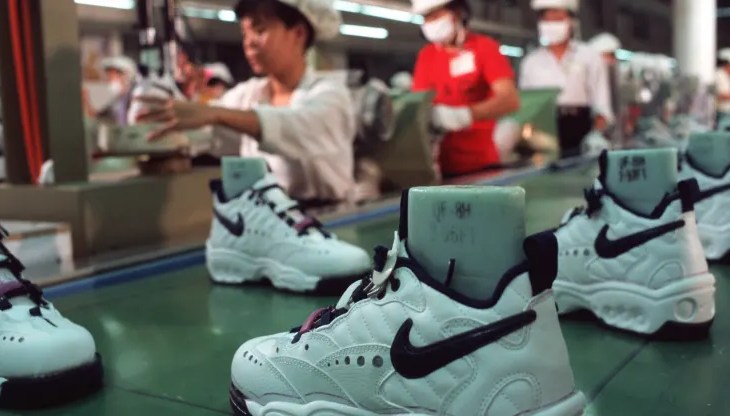
While China has continued its “zero-COVID” strategy, forcing factory closures and stalling production, Vietnam continued to grow exports across categories such as footwear. Vietnam is currently ranked second to China in footwear production, exporting over 1 billion pairs of leather and athletic shoes, with a value of $20.78 billion in exports in 2021. As of early this year, Vietnam had over 2,200 footwear manufacturing factories, mainly located around Ho Chi Minh city.

Through the first half of 2022, footwear exports from Vietnam reached at $ 11.79 billion, an increase of 13.3%, roughly $2 billion per month. Through August, exports were up by 29.7% relative to the same period in 2021. The largest footwear buyers are the U.S. followed by China, with Germany, Japan, Korea and Belgium all buying in the range of $750 $1 billion of footwear annually from Vietnam.
The U.S. footwear market was valued at around $105 billion in 2021, a 27% global share, while China’s footwear market is expected to grow to around $80 billion by 2026. The global footwear market is expected to grow to around $440 billion by 2026, which means Vietnam has plenty of room to expand its share, especially from China’s fast-growing domestic market.
Based on Vietnam’s stability, attractive investment climate and large pool of cheap labor, some of the largest brands, such as Adidas and Nike, have their main footwear production facilities in Vietnam. Nike has over 100 suppliers in Vietnam. The country’s labor costs around half that of China, at approximately $3 per hour versus $6.50 per hour in China.
U.S. tariffs on China and free trade agreements (FTAs) with other countries and regions, such as the Comprehensive and Progressive Agreement for Trans-Pacific Partnership (CPTPP), have helped Vietnamese exports. The EU-Vietnam FTA has also contributed to trade growth with Europe, with an increase of 18.2% in trade year-on-year. A similar FTA with the U.K. has supported a 10.9% increase in trade.
A report by Research and Markets predicts that footwear production and exports from Vietnam are expected to continue to grow by at least 8.1% through to 2031, which would value its footwear export at around $40 billion.
Going forward, Vietnam will see more competition from other ASEAN countries, with similar appeal of cheap labor and available workforce. Cambodia saw an increase in footwear exports through Q3 this year of 47.4% to 55.04 million pairs of shoes, while India saw a 51% increase to 28.24 million pairs. Malaysia and Brazil are the other fast-growing footwear manufacturing locations.
Footwear and low-cost manufacturing are not the only categories where Vietnam is seeing growth. Apple, Google, Samsung and Microsoft have all established a significant presence in Vietnam as a hedge against China. Apple is reportedly shifting some iPad production out of China to Vietnam. Samsung just built a $220 million R&D center in Hanoi, partly to support strong sales growth in Vietnam.
This article was first published in our Q4 Retail Sourcing Report. This is a quarterly initiative where we analyse trends and indicators that will incoming global sourcing and supply chains in the near term and beyond.
Working with retailers, brands and importers headquartered in North America, Germany, Austria, Switzerland, Hong Kong, Taiwan, and China for over 20 years in 50 countries, TradeBeyond empowers buyers and suppliers by streamlining their daily efforts from product ideation to production.
DOWNLOAD THE Q4 2022 RETAIL SOURCING REPORT HERE.
Cloud Solutions that would accelerate your business:
Free cloud platform for suppliers/buyers for sourcing/purchasing
Table of Contents
Subscribe to the Newsletter
More Articles

Article
What Denver’s AAFA Event Taught Us About Traceability
Explore three takeaways from AAFA 2026 on supply chain traceability, due diligence and the reliable data brands need to meet evolving regulations.

Article
Apparel Sourcing in 2026: De Minimis, CAFTA-DR, and Section 301
Explore how de minimis changes, CAFTA-DR rules, and Section 301 tariffs are reshaping apparel sourcing, trade compliance, and supply chain strategy.

Article
DPP and ESPR: A Definitive Guide to the EU Digital Product Passports (DPP) and ESPR
Learn what the EU Digital Product Passport and ESPR require, who must comply, the 2026–2030 timeline, key data fields, and how brands can prepare.
Get in contact with one of our experts
" height="32px" id="vQcZRDBpx" width="32px"/></svg>)
Unify people, data, and processes to simplify global operations
Empower smarter, faster decisions that drive growth and profit
Build resilient, responsible networks for a changing world