
The retail supply chain landscape is rapidly evolving on multiple fronts. From fast-evolving and still disparate sustainability regulations to the accelerated pace of promising innovations such as AI, supply chains are under pressure to adapt quickly. During Q2 2024, TradeBeyond, in partnership with Gatepoint Research, conducted a survey of senior retail executives, including VPs, directors, and senior managers of global retailers and brands. These leaders explained their most pressing supply chain challenges and priorities as they prepare for the future.
Below, we share the survey's most revealing findings, uncovering key areas where retailers are focusing their efforts and where they still face significant hurdles.
Manual processes: A persistent obstacle to efficiency
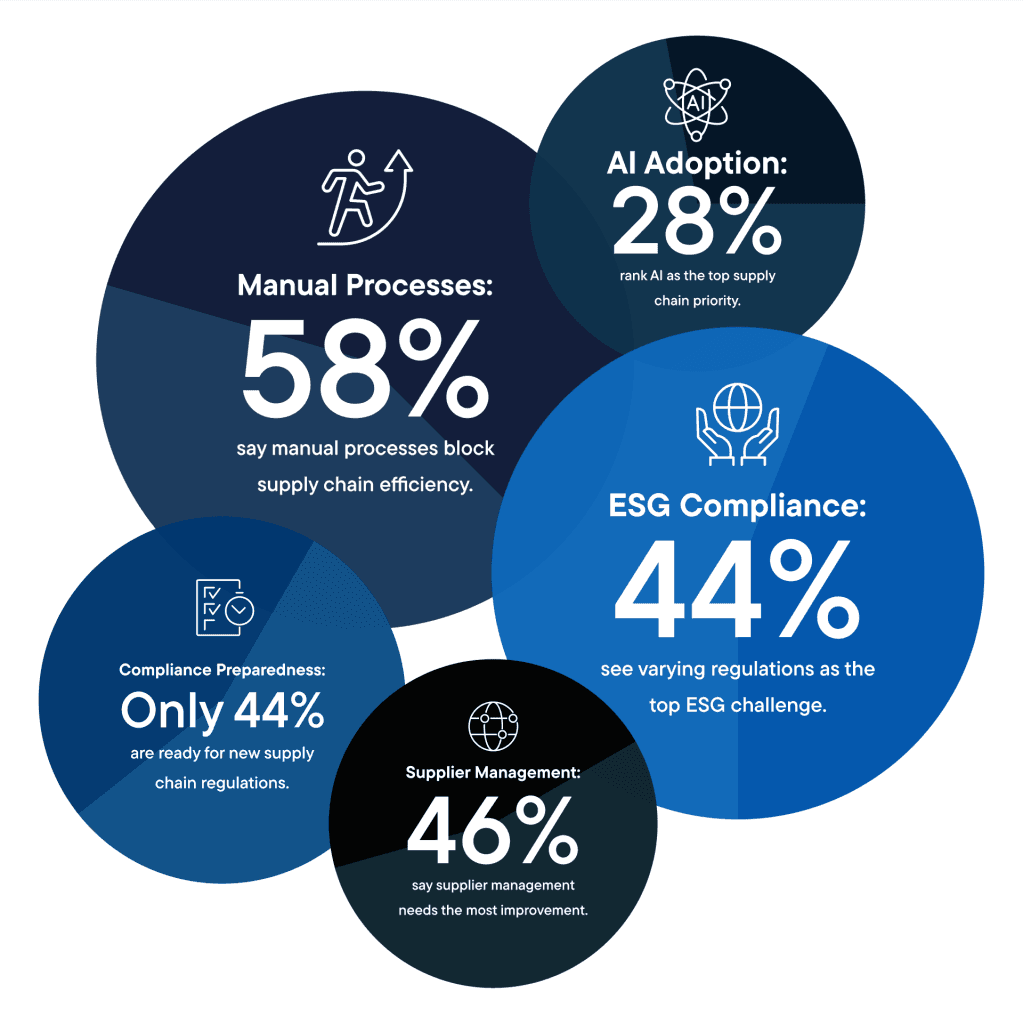
According to our survey, 58% of respondents identified manual processes as the primary factor hampering supply chain efficiency. The reliance on outdated methods continues to create bottlenecks and slow down decision-making, underscoring the urgent need for digital transformation in retail supply chains. The digital revolution still has much room to penetrate most global supply chain organizations.
After manual processes, insufficient collaboration emerged as the second most cited obstacle to supply chain efficiency, with 26% of respondents citing communication as a barrier. As the need for better communication and collaboration deepens within supply chains, the flow of information between all stakeholders remains suboptimal. Companies must address these inefficiencies to stay competitive and meet the demands of a fast-paced market.
AI adoption is the top priority for supply chain managers
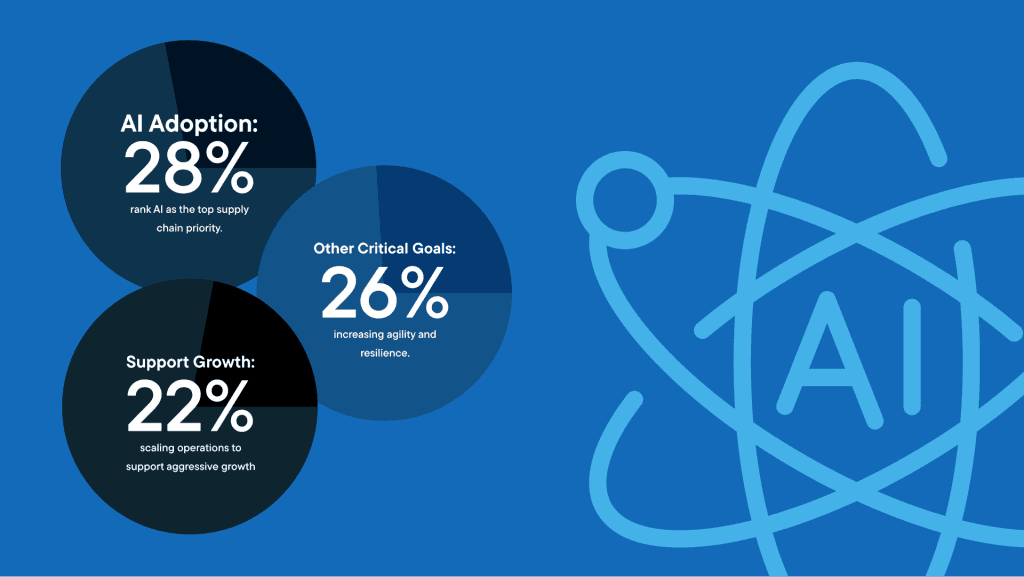
Supply chain managers are serious about Artificial intelligence (AI). 28% of brands ranked implementing AI as their top priority, with the aim of enhancing efficiency across their supply chains. This makes AI the leading focus among other critical goals, such as increasing agility and resilience (26%), a priority after so many years of large-scale supply chain disruptions, and scaling operations to support aggressive growth (22%).
Retailers recognize that AI-driven solutions can optimize processes, reduce costs, and improve decision-making. For those still on the fence, the message is clear—embracing AI is now necessary to stay ahead in today’s competitive landscape.
Retailers lag in compliance preparedness
The survey also revealed a concerning gap in compliance readiness. Only 44% of respondents are fully prepared to comply with new global supply chain regulations. This statistic shows that while companies are making progress, most still have significant work to do to meet these new rigorous standards. The journey to full compliance is demanding, requiring robust systems for due diligence, supplier management and traceability.

Retailers struggle with ESG obstacles
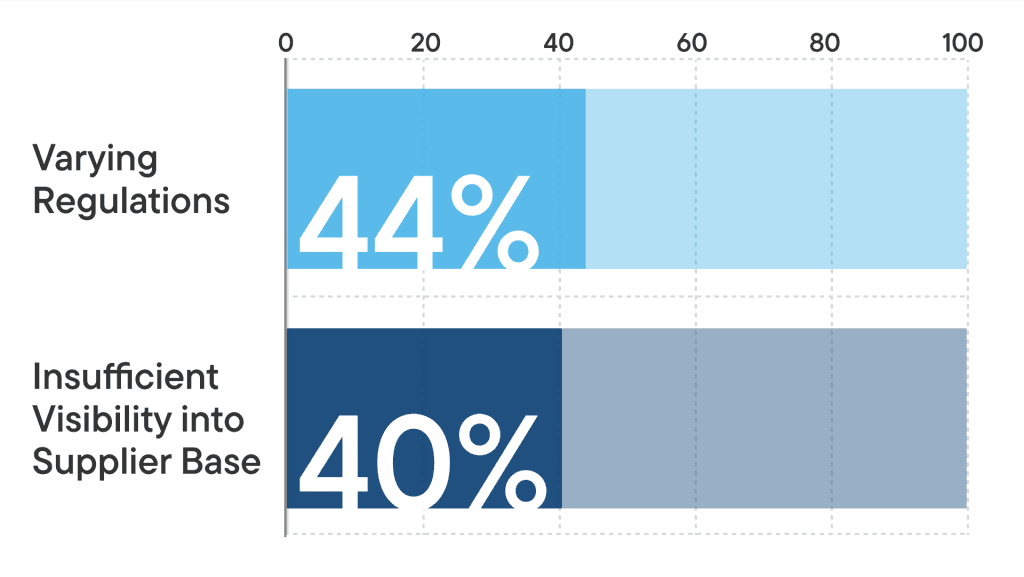
Expanding on the challenges of regulatory readiness, our survey found that Environmental, Social, and Governance (ESG) compliance remains a significant challenge for many retailers. The survey found that the biggest obstacles are the variances in regulations from country to country (44%) and insufficient visibility into the supplier base (40%). These challenges make it difficult to maintain consistent standards across global operations, increasing the risk of non-compliance and reputational damage. To overcome these hurdles, companies need to invest in solutions that provide comprehensive visibility and control across their supply chains.
Supplier management: The most urgent area for improvement
When asked where their supply chains could most benefit from increased efficiency, 46% of respondents pointed to supplier management. This was followed by order and production management, and shipping and logistics, both cited by 38%. Improving supplier management is critical for retailers aiming to streamline operations and reduce costs, as it directly impacts the ability to meet demand and maintain product quality. However, selecting, vetting, and truly collaborating with your entire supply chain must be recognized as a top-level priority. By leveraging the latest innovations, such as AI, retailers can achieve significant improvements across their supply chain operations. Supplier management is seen as critical for retailers looking to streamline their operations and reduce costs, as it directly impacts the ability to meet demand and maintain product quality.
The survey’s findings highlight the complexity that supply chain organizations face in continuously improving their operations. Ongoing challenges, such as manual processes, continue to impair many, while evolving sustainability regulations add significant complexities many enterprises aren’t equipped to manage. Technology and innovations such as AI, will play a crucial role in tackling these issues. The companies that successfully navigate these challenges and embrace innovation will be the ones that thrive in the years ahead.
Transform supply chain challenges into opportunities with TradeBeyond
From AI-driven traceability innovations, trusted sourcing solutions, and unapparelled supplier management tools, TradeBeyond’s industry-leading multi-enterprise platform supports every aspect of your supply chain. Explore our modular solutions and see how TradeBeyond can help you source more efficiently and sustainably.
Table of Contents
Subscribe to the Newsletter
More Articles

Article
Defect Classification: How to Build a Critical, Major, and Minor Defect System
How to build a defect classification system - critical, major, and minor defect definitions, AQL thresholds, category examples, and enforcement at scale.

Article
Digital Product Passports: Is Your Product Data Ready?
Learn why DPP readiness is a data project, not a QR code project, with insights from TradeBeyond and EON on compliance, traceability and circularity.

Article
The Life of a Jacket: How Digital Product Passports Will Change What Happens After You Buy
Learn how Digital Product Passports connect product and supply-chain data to support traceability, circularity, resale, repair and recycling.
" height="32px" id="vQcZRDBpx" width="32px"/></svg>)